Rooted in centuries of Japanese beauty tradition, Kobido means “the ancient way of beauty.” This intricate facial massage combines precise, rhythmic movements to release facial tension, stimulate circulation, and promote a naturally lifted, sculpted, and refreshed appearance.
How it works · see all pricing
Coming soon
Be the first to book. Join the waitlist to hear the day Kobido opens, and receive an exclusive offer for waitlist members.
Join the waitlistMost facials focus on the skin. Kobido goes deeper.
Our facial muscles work constantly. Over time, tension can build up around the jaw, forehead, and eyes, affecting how relaxed and refreshed our face looks.
Rooted in centuries of Japanese beauty tradition, Kobido takes a different approach. Through a combination of precise, rhythmic movements, lifting techniques, and facial muscle massage, it helps release tension, stimulate circulation, and encourage natural lymphatic flow.
The focus is on a naturally refreshed appearance, with less visible puffiness, more relaxed-looking features, and more defined-looking contours.
Precise pressure on specific points across the face, inspired by traditional Japanese massage techniques, helping release tension you may not even realize you’re holding.
Fast, rhythmic tapping and massage movements that stimulate local circulation, contributing to that fresh, healthy-looking glow.
Long, gentle lifting strokes that encourage natural fluid movement, helping reduce the appearance of puffiness and enhance the look of facial contours.
The treatment extends beyond the face, working across the neck, shoulders, and scalp for a more complete experience.
Rooted in traditional Japanese massage practices, Kobido brings together precise technique, facial muscle work, and relaxation.
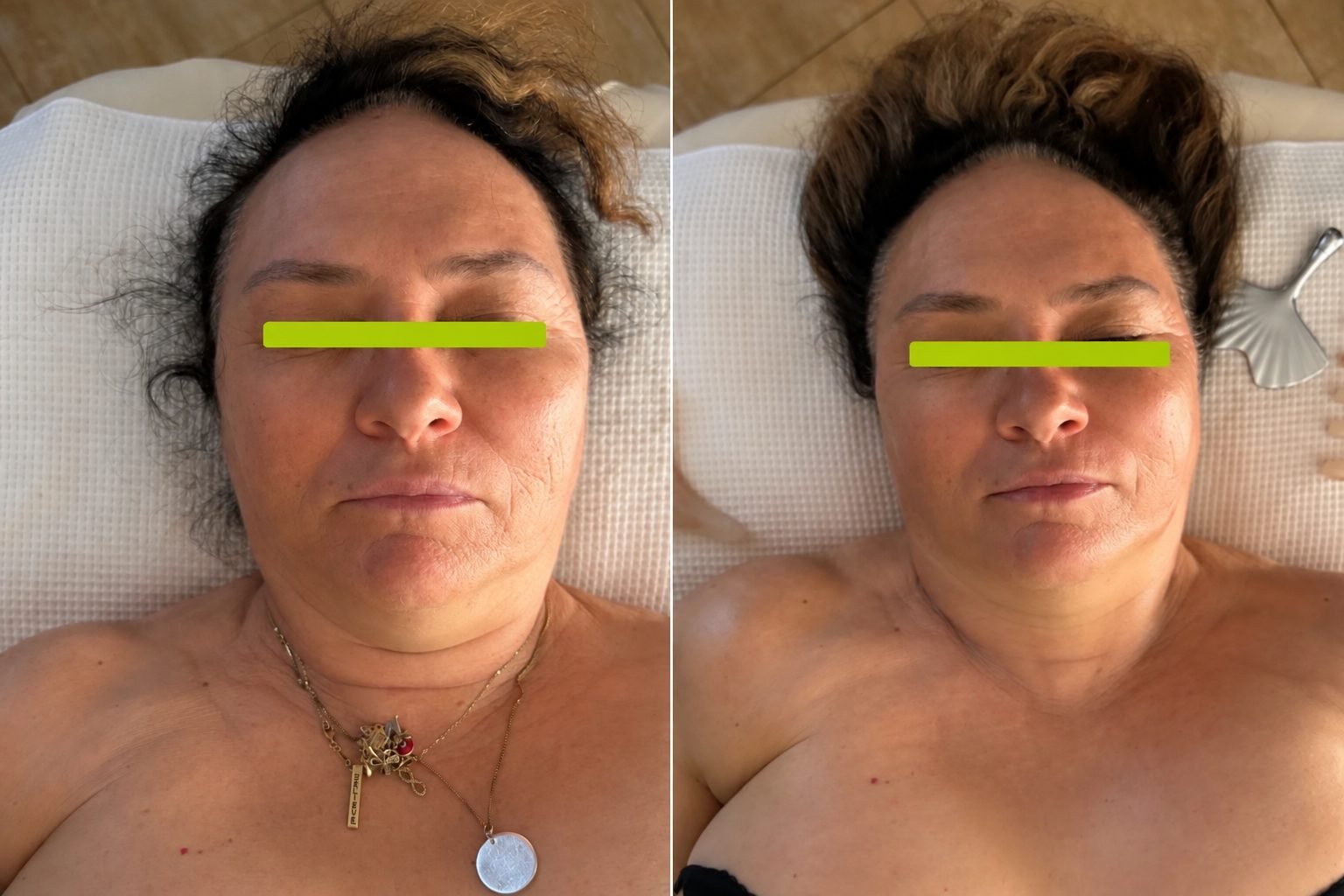
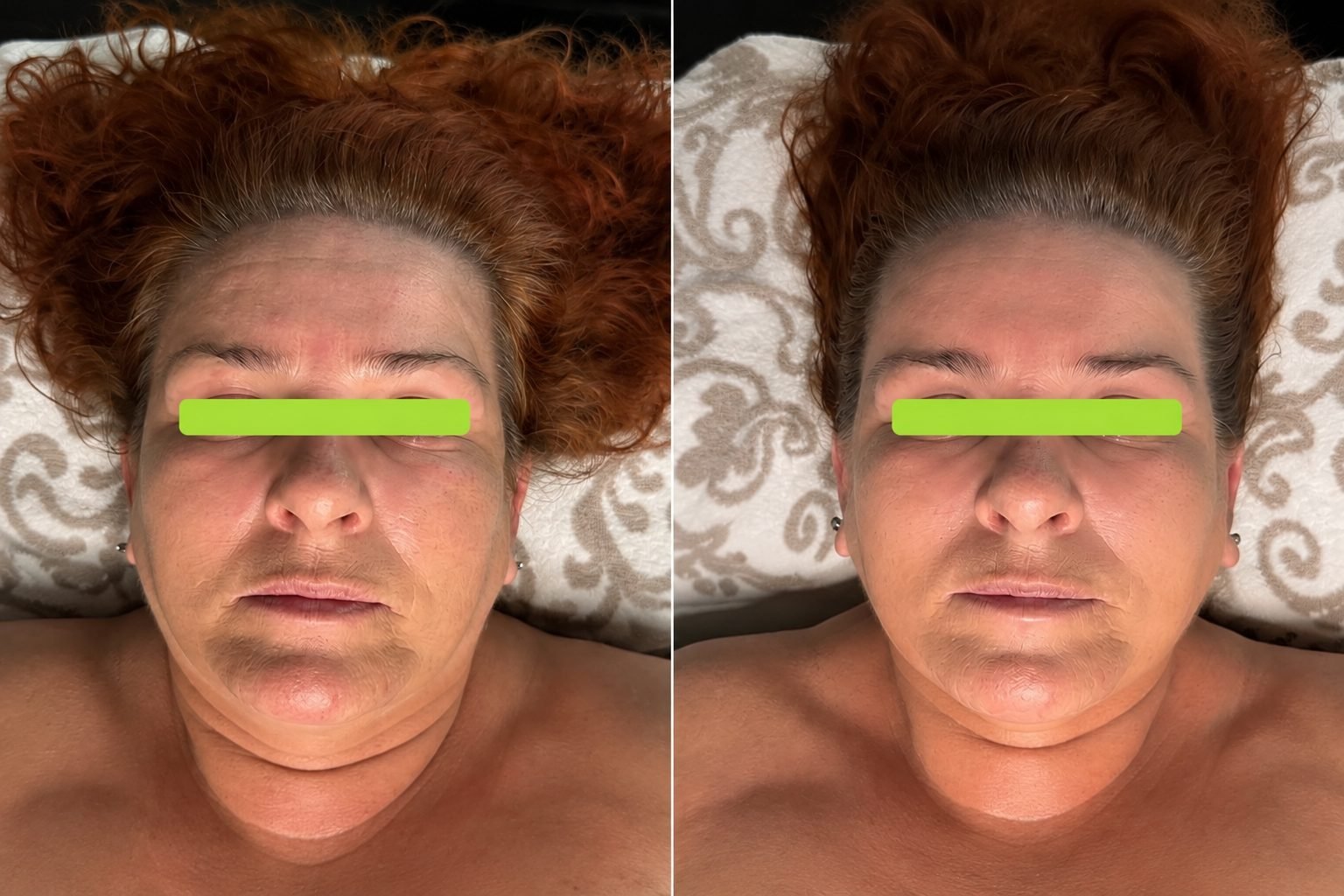 After
Before
Drag to compare. Results may vary from person to person and are not guaranteed. They depend on factors such as your body, lifestyle, hydration and how many sessions you have.
Most facials care for the skin. Kobido also works the structure underneath it, which is why people call it a natural facelift — though nothing is cut, injected or changed, and you still look like you.
Kobido (古美道) means “the ancient way of beauty.” According to the Kobido lineage it began in 1472 in what is now Shizuoka, near Mount Fuji, when two of Japan’s most respected anma masters held a contest that ran for months. What came out of it was a technique refined enough to be kept for the Empress and the imperial court.
For more than five hundred years it passed from master to student and was rarely shown outside that circle. The twenty-sixth-generation master, Dr Shogo Mochizuki, still teaches it today, and it has travelled from Japan to Paris to Fort Lauderdale.
A 2024 study published in Aesthetic Cosmetology and Medicine examined facial treatments incorporating Kobido massage techniques.
The study followed 27 women who received 10 treatments each. Researchers reported reduced facial muscle tension, smoother-looking skin folds, and changes in facial contours following the treatment series.
These findings offer an interesting early look at the cosmetic potential of traditional Japanese facial massage. It was a small study without a control group, so it is a promising early signal rather than proof, and individual results vary.
Source: Leszczyńska K. & Zaleski A. (2024). Treatments using elements of Kobido massage for anti-ageing prevention and relaxation. Aesthetic Cosmetology and Medicine, 13(3), 103–111.
No. It is firm and quick in places, which surprises people who were expecting a spa facial, but it should never be painful. If anything does not feel right, say so and we change the pressure. Nobody here is interested in you enduring anything.
Possibly slightly pink — from the circulation rather than from irritation. It usually settles within an hour or two. Nothing is peeling and nothing is healing, so you can go straight back to your day.
About an hour. That is the treatment itself — the fast work, the pressure points and the long lifting strokes all need time, and rushing any of them is how Kobido turns into an ordinary face massage.
Weekly or fortnightly while you are working toward something, then monthly to hold it. Kobido builds across sessions rather than arriving in one, and we would rather say that than sell you a single session on a promise it cannot keep.
Yes. They do entirely different jobs — Kobido is the face, Bodyroll is circulation through the body, Signature Sculpt works a specific area. They sit well together, either on separate days or in the same visit.
Please wait, or speak to your doctor first, if you have had fillers in the last six weeks, Botox in the last two weeks, a recent peel or facial surgery, active skin inflammation or infection, a fever, or if you are in the first trimester of pregnancy.
Otherwise Kobido suits most skin types and ages. We will ask about all of this before your first session.
Not in the way an injectable does. Nothing is added and nothing is altered — your features are your features. What changes is tension, circulation and fluid, so the honest description is that you look rested rather than different.